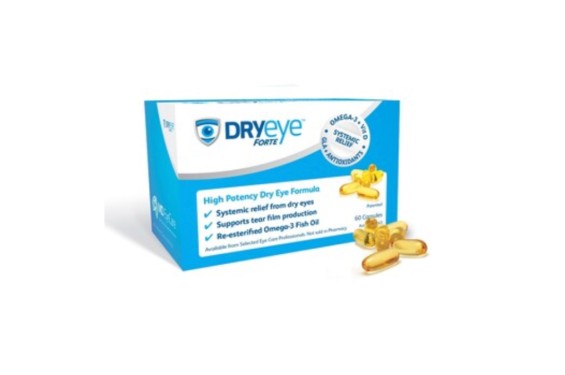
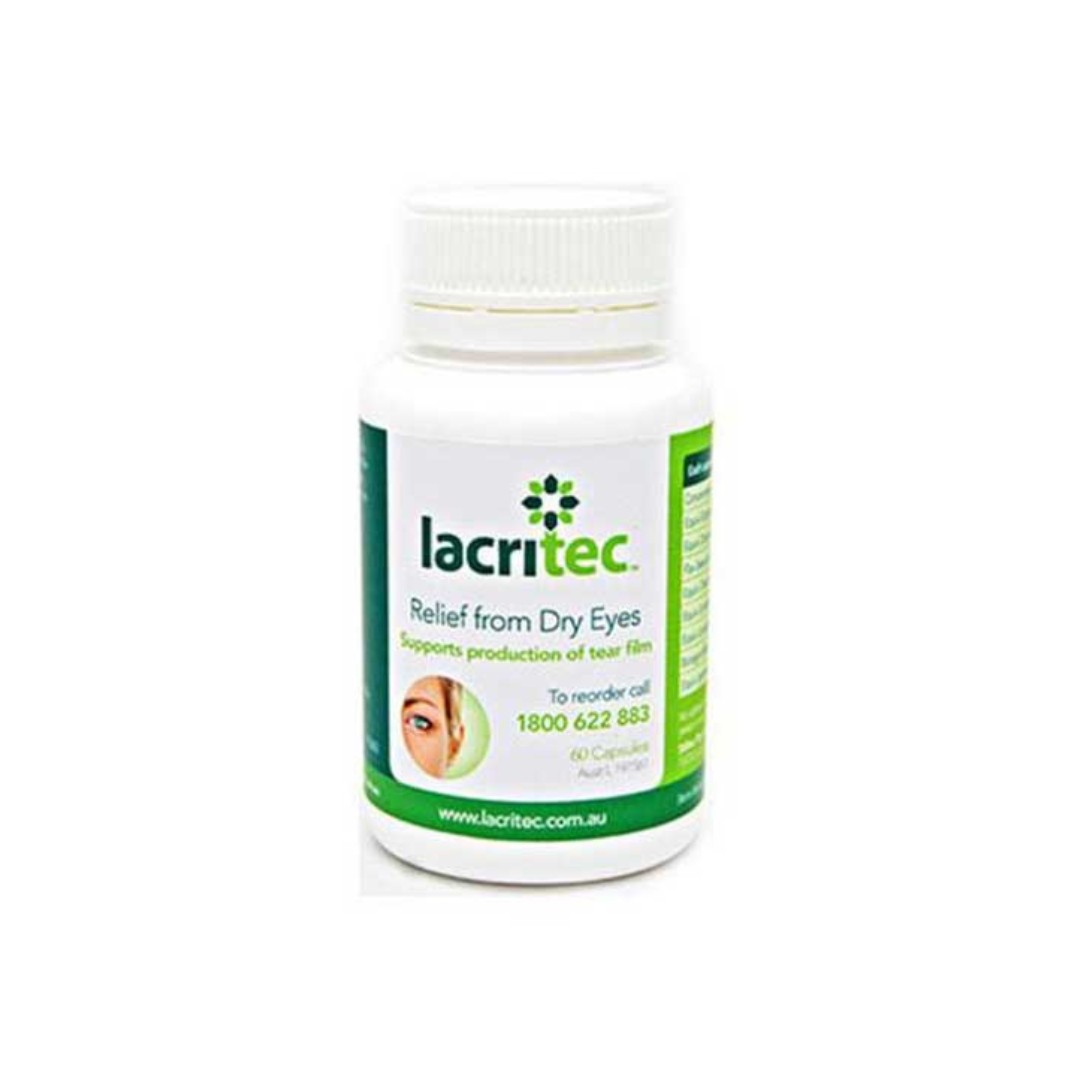
Lacritec and DRYeye Forte are two Australian-made dry eye supplements. Both are fish oil and borage oil capsules, and both start at three capsules a day. The difference is in what is inside each capsule, and that changes which one suits you.
Here’s how they compare, label against label.

Lacritec vs DRYeye Forte: the short answer
DRYeye Forte has more EPA and DHA in each capsule: 400 mg against about 201 mg in Lacritec. It also adds vitamin D3 and vitamin E. Lacritec adds flaxseed oil and has no vitamin D3 or vitamin E. If you want more fish oil omega-3 in fewer capsules, look at DRYeye Forte. If you have been told to avoid extra vitamin D, Lacritec is the one without it.
What is in Lacritec and DRYeye Forte?
These are the amounts in one capsule, taken from each brand’s own ingredient list.
| Per capsule | DRYeye Forte | Lacritec |
|---|---|---|
| EPA (omega-3 from fish oil) | 240 mg | 134 mg |
| DHA (omega-3 from fish oil) | 160 mg | 66.8 mg |
| EPA and DHA combined | 400 mg | about 201 mg |
| Flaxseed (linseed) oil | none | 334 mg, giving 192 mg of the plant omega-3 ALA |
| Borage oil (a source of the omega-6 GLA) | 455 mg | 434 mg, giving 95.5 mg of GLA |
| Vitamin D3 | 200 IU | none |
| Vitamin E | 40 IU | none |
The Lacritec figures come from the ingredient list on the Lacritec website. The DRYeye Forte figures are on our DRYeye Forte product page. You can also see our Lacritec product page.
How much EPA and DHA is in three capsules of Lacritec vs DRYeye Forte?
Both brands start you on three capsules a day, so that is the fairest way to line them up.
- Three DRYeye Forte capsules: 720 mg EPA and 480 mg DHA, so 1,200 mg of EPA and DHA in total.
- Three Lacritec capsules: about 402 mg EPA and 200 mg DHA, so about 602 mg in total.
To get the same EPA and DHA from Lacritec, you would need about six capsules a day. That is simple maths from the labels, nothing more.
Lacritec makes up some of the gap with flaxseed oil. Flaxseed gives you ALA, which is a plant omega-3, not EPA or DHA. The Australian Nutrient Reference Values list ALA as its own fatty acid, separate from EPA and DHA. So compare EPA and DHA with EPA and DHA, and count the ALA as an extra.
What does the research say about omega-3 for dry eyes?
The research looks at omega-3 in general, not at either brand. A 2023 review of eight trials and 1,107 people found omega-3 supplements improved dry eye symptoms, with no clear change in the clinical eye tests. Another 2023 review linked bigger symptom changes to higher doses and longer use. These findings are about omega-3 in general. They do not show how either product will suit you.
There are limits. A large 2018 trial found fish oil did no better than an olive oil placebo on dry eye symptom scores. A 2026 review of 27 trials found results depended on what was causing the dry eye. That is why your optometrist or GP is the right person to ask whether a supplement fits your situation. Our dry eye supplements guide covers the research in more detail.
Vitamin D3 and vitamin E in DRYeye Forte
DRYeye Forte adds 200 IU of vitamin D3 and 40 IU of vitamin E to every capsule. Lacritec adds neither.
For many people it makes no difference to the choice. It matters if you already take vitamin D, or if your doctor has told you to watch your vitamin D or calcium levels. Add up everything you take before you start. Ask your GP or pharmacist if you are not sure. That is the main case where Lacritec is the simpler choice.
How do you take Lacritec and DRYeye Forte?
Each starts with a higher dose, then drops to a lower daily dose.
- DRYeye Forte: three capsules a day with meals for the first six to eight weeks. Then two or three a day, split between morning and afternoon.
- Lacritec: three capsules a day with meals for the first six weeks. Then two or three a day, split between morning and afternoon.
Don’t judge a supplement after a week or two. Both brands set a starting period of six weeks or more, so give it the full starting period before you decide. Set a reminder on your phone if you need one (it is easy to miss a day).
How many Lacritec or DRYeye Forte packs do you need?
Buy enough for the whole starting course up front, so you are not reordering halfway through.
- DRYeye Forte comes in packets of 60 capsules. At three a day for six to eight weeks you need 126 to 168 capsules, so one packet will not get you through the start. The DRYeye Forte 3 packet option gives you 180 capsules, enough for the full starting course. The price per packet drops when you buy 6 or 12 at once.
- Lacritec comes in bottles of 200 capsules, about 66 days at three a day. The Lacritec Twin Pack gives you 400 capsules. That covers the six-week starting course and about four and a half more months at two a day. That is close to six months in all.
Because you take either one every day, a multi-pack is the simplest way to stay on track without running out.
Who should check with a doctor before taking Lacritec or DRYeye Forte?
The DRYeye Forte product information lists these cautions:
- If you take a blood-thinning medicine such as warfarin, check with your doctor first. High doses of omega-3, omega-6 and vitamin E may increase bleeding risk.
- Not recommended during pregnancy.
- Not recommended for anyone under 18.
- Some people may be sensitive to individual ingredients.
The Lacritec product information says to review the full product information and the maker’s guidelines before use. It also says to ask a healthcare professional whether it suits you. That matters most if you have an eye condition or have had a recent eye procedure. Lacritec also contains fish oil and borage oil. So if you take a blood thinner, are pregnant or breastfeeding, or take other supplements, ask your doctor or pharmacist before starting either one.
Which dry eye supplement should you choose?
If you want more EPA and DHA per capsule and vitamin D is not a problem for you, DRYeye Forte has more EPA and DHA per capsule.
If you need to avoid extra vitamin D, or you prefer fish oil mixed with flaxseed oil, Lacritec is the one to try.
If you cannot decide, pick one and give it the full starting period. Switching between the two every few weeks makes it hard to compare them.
Dry eye supplements alongside drops, lid care and heat
A supplement is one part of looking after dry eyes, not the whole thing. It is often used alongside:
- Lubricating eye drops for comfort during the day, such as Hylo-Forte or the others in our eye drops range.
- A daily eyelid clean with a lid cleanser or wipes from our lid care range.
- A warm compress or heated eye mask from our eye masks and compresses.
Healthdirect lists over-the-counter lubricating drops, gels and ointments for dry eyes. It also says some people will need to see a doctor or optometrist for treatment. See one if your eyes are painful or red, your vision changes, or things are not improving.

Lacritec and DRYeye Forte questions
Can I take Lacritec and DRYeye Forte together?
There is no reason to. Both are fish oil and borage oil supplements, so taking both doubles your intake of those oils. Choose one.
Can I take a dry eye supplement with my eye drops?
Yes. Supplements are capsules you swallow, and drops go in your eyes, so they are used side by side. You can keep using your drops while you wait to see how the supplement goes.
Are Lacritec and DRYeye Forte made in Australia?
Yes. Lacritec is labelled made in Australia, and the DRYeye Forte website describes it as Australian-made.
Do I have to take a dry eye supplement forever?
Not necessarily. Both brands move you to a lower daily dose after the starting period. How long to keep going is a good question for your optometrist or GP.
Buy Lacritec and DRYeye Forte online
We stock both, and we ship anywhere in Australia. For the full starting course, go for a multi-pack:
- DRYeye Forte, 3 packets (180 capsules). Single packets are $35.95, and the price per packet drops on 6 and 12 packets.
- Lacritec Twin Pack, 2 x 200 capsules, about six months of supply.
- Lacritec Dry Eye Supplement, single bottle of 200 capsules, $95.
See the rest of our eye supplements and the full dry eye range.
This article is general information, not medical advice. Read the label and use only as directed. If symptoms persist, see your healthcare professional.